Saturday, April 26, 2014

Woody Woodward (#476)

News flash: I found this great site today, documenting baseball events that happened each year (game events, personnel moves, etc): www.baseballlibrary.com/chronology


William “Woody” Woodward was a 2B-SS for the Braves from 1963 to 1968, and a shortstop for the Reds from 1968 to 1971. His greatest playing time came during 1966-67 with Atlanta.

Woodward was signed by the Milwaukee Braves in 1963. After playing shortstop with their triple-A Denver Bears for most of the season, Woody made his major-league debut that September.


Woodward stuck with the Braves for the entire 1964 season, backing up 2nd baseman Frank Bolling and shortstop Denis Menke.

Woody began the 1965 season with the triple-A Atlanta Crackers, but was called up to the Braves in late-May to fill in at shortstop for Menke, who was out of the lineup for 5 weeks. Even when Menke returned, Woodward remained the primary shortstop, starting 92 of the final 132 games.

1966 found Woodward back as the swing-man between 2nd base and shortstop, but this time he was the primary 2nd baseman, starting 69 games to Bolling’s 57 starts. Woody also started 67 games at shortstop. He collected a career-high 43 RBI this season.

Frank Bolling was jettisoned after the 1966 season, clearing the way at 2nd base for Woodward, but Woody had someone else to worry about now – rookie 2nd baseman Felix Millan. Woodward started 114 games at 2nd base, while Millan started 37, mostly in late-April and the final 19 games of the season. Woody also made 15 starts at SS, all in September, with Menke again out of the lineup after 9/6.

1968 brought a change in the Braves’ keystone combo. With Millan starting first 64 games at 2B and newly-acquired SS Sonny Jackson (coming from the Astros for Menke in the off-season) starting the first 35 games at short, Woodward was the odd man out.

After a few starts at shortstop in May, Woody was traded to the Reds (with pitchers Clay Carroll and Tony Cloninger) for pitchers Milt Pappas and Ted Davidson, and infielder Bob Johnson. Soon after the trade, Woodward started 16 consecutive games at SS filling in for Chico Cardenas, then settled in to a backup role.

The Reds traded Cardenas to the Twins prior to the 1969 season, and after experimenting with Darrel Chaney and Chico Ruiz for 92 games, Woodward took over the starting shortstop job on 7/25, and started the rest of the way.

In 1970 Woodward shared the SS job with rookie Dave Concepcion. (Uh-oh, can anyone guess where Woody’s career goes from here?) He also hit his only career home run in 1970.

1971 was his final season as a player. He started 65 games at shortstop, but that was 20 less than Concepcion. Woody also started 7 games each at 2B and 3B.

After his playing career, Woodward worked as a Reds’ TV commentator for a short time, then was the head baseball coach at Florida State University (where he had played before turning pro) from 1975-78.

Woody then worked in the front office for several teams. He was the Reds’ assistant GM from 1981-84, Yankees’ GM from 1985-87, Phillies’ GM for the first half of 1988, and the Mariners’ VP of Baseball Operations from July 1988 through the 1999 season.

Tuesday, April 8, 2014

Al Downing (#105)

Like Hank Aaron, Al Downing also achieved some notoriety 40 years ago today. As a starting pitcher for the Dodgers that season, he gave up Aaron’s 715th career home run, pushing him past Babe Ruth.


Al Downing began his career with the Yankees. He was signed by New York in 1961, and along with 12 starts at class-A Binghamton, Downing made his debut with the Yankees on July 19th, pitching 5 games with the Bombers between mid-July and mid-September.

He spent the 1962 season back in triple-A, only pitching 1 inning for the Yankees on September 30th.

In 1963 he began the season in the minors, but was called up in early June, joining a rotation of Whitey Ford, Ralph Terry, Jim Bouton, and Stan Williams. Al pitched in 24 games from 6/7 to the end of the season. He finished his rookie season with 22 starts, 10 complete games, a 13-5 record, 171 strikeouts, and a 2.56 ERA. He also pitched in one game against the Dodgers in the World Series.

The following season would be the Yankees last good season for over a decade. Downing, along with Ford and Bouton, comprised the “Big 3” in the starting rotation. Al led the league with 217 strikeouts (but also led with 120 walks).

Downing remained in the starting rotation through the 1969 season, then was traded to the Athletics for 1st baseman Danny Cater. After only ½ season in Oakland, he was traded to the Brewers (with 1st baseman Tito Francona) for outfielder Steve Hovley. (?!?)

In February 1971, the Brewers traded Downing to the Dodgers for outfielder Andy Kosco. Al pitched for the Dodgers for 6½ seasons. His best season in LA was his first – winning 20 games, leading the NL with 5 shutouts, and finishing 3rd in the Cy Young voting. He continued as a starter through the 1974 season, then became primarily a reliever in his last 3 seasons.

Downing’s last game was on July 13, 1977. He was released a week later, ending his 17-year career.

Monday, March 31, 2014

Tony Horton (custom)

Today we have an unplanned post: Indians' 1st baseman Tony Horton. Although Horton played for the Red Sox off-and-on from 1964 to early 1967, and was the Indians' starting 1st baseman from late-June 1967 to late-August 1970, Topps never made a card for him. [I found this card a few days ago on the www.ootpdevelopments.com website.]

Horton was signed by the Red Sox in 1962, and played in their farm system from 1963-66. He made his major-league debut in July 1964, and after the season the team traded away veteran 1st baseman Dick Stuart to open the position for Tony in 1965.

That plan didn't work out, as the manager decided to use veteran Lee Thomas for most of the season, with Tony spending part of '65 back in the minors.


After Horton started the first 4 games of the 1966 season at 1st base, rookie George Scott was moved from 3rd base to 1st base. Horton was sent to the bench for the rest of April, then demoted to triple-A for the remainder of the season.

Stuck behind the slugging Scott, Tony's big break came on June 4, 1967 when he was traded to the Indians (with veteran outfielder Don Demeter) for pitcher Gary Bell.

Within a month, Horton took over the first base job from incumbent Fred Whitfield, and held that post until the final game of his career on August 28, 1970.

Although missing 3 weeks in 1968 with a knee injury, Tony still led the Indians with 14 home runs and 59 RBI.

Tony's best season offensively was 1969, when he hit 27 homers and collected 93 RBI along with a .278 batting average. Horton spent most of 1969 and the first half on 1970 as the team's cleanup hitter.

Sometime in 1968, Horton began to feel the pressure of being a big-league ballplayer. His anxieties came to a head during the 1970 season. In a late-June game against the Yankees, Horton struck out on several "eephus" pitches from reliever Steve Hamilton, then threw his bat and helmet, and crawled back to the dugout.

After the slumping Horton endured heavy booing from the hometown fans, he attempted suicide after a game on August 28th, and suffered a nervous breakdown. Tony was hospitalized during the 1970-71 off-season, and by the time the 1971 season rolled around, it was apparent that he was not ready to play. Not until 1972 did the Indians realize Horton would not be returning to baseball.

Tony Horton's SABR page.

Tuesday, March 11, 2014

Mickey Lolich (#414)

Mickey Lolich was a starting pitcher for the Tigers for 13 seasons (1963-75). He also played for the Mets and Padres, retiring in 1979. He still holds the Tigers’ record for strikeouts and shutouts.

Lolich was signed by the Tigers in 1958. He pitched in the minors from 1959 to May 1963, and made his big-league debut on May 12th (my birthday!), pitching the last 2 innings of a blowout loss to the Indians.


Beginning in his 2nd season, Mickey won at least 14 games for 11 consecutive seasons, including a league-leading 25 wins in 1971 along with 22 wins in 1972. He won 17 games during the Tigers’ championship 1968 season, but that was FOURTEEN LESS than teammate Denny McLain’s 31 wins. He also won 3 games in the 1968 World Series, including the deciding game #7 against Bob Gibson.

Lolich made the all-star team in ’69, ’71, and ’72, and finished 2nd and 3rd in the Cy Young voting in ’71 and ’72. In 1971 he also led the AL in strikeouts (308) and complete games (29).

After the 1975 season, he was traded to the Mets for Rusty Staub, and struggled to a 8-13 record in 30 starts in 1976.

He retired after the season, sitting out 1977, but came back with the Padres for 1978-79 as a reliever.

Saturday, March 8, 2014

John Purdin (#336)

John Purdin was a relief pitcher for the Dodgers from 1964-69, although his major-league playing time was mostly confined to 1968.

This is his 2nd of 4 baseball cards. After appearing on a Dodgers Rookies card in 1965, Purdin had his own Dodger card in the '68 and '69 sets. He also appears in the 1971 set as a member of the White Sox. It's odd that Topps would give him his own card in the 1968 set, after not being in the majors since 1965. The same could be said for his 1971 card.


Purdin was signed by the Dodgers in 1964. He pitched a perfect game during his first season in the minors, and made his major-league debut in September 1964, throwing a 2-hit shutout in the final week of the season.

Purdin pitched in the minors from 1964-67, while also playing for the Dodgers in ’64 (3 games) and ’65 (11 games). After no major-league appearances from 1966-67, John spent the entire 1968 season with LA, playing in 35 games (all but 1 out of the bullpen).

In 1969 he made 9 relief appearances, scattered over the first 4 months of the season. His final major-league game was on 8/1/69.

John was traded to the Angels in July 1970, and to the White Sox after the season. His time with the Angels' and White Sox' organizations was spent pitching for triple-A Hawaii.

Purdin passed away in March 2010 at age 67.

Wednesday, February 26, 2014

Luis Tiant (#532)

Luis Tiant was a starting pitcher for 19 seasons (1964-82). He was a member of the Cleveland Indians’ rotation during the 1960s (which is how I always identify him).

The middle (and probably more famous) part of his career was spent with the Boston Red Sox, where, in addition to having three 20-win seasons, he won 18 games in 1975 for the AL champs and was 3-0 in the post-season.

Tiant is also famous for his patented 180-degree “face the center fielder” pitching windup motion.

Luis began his pro career at age 18, pitching for the Mexico City Tigers from 1959-61. The Tigers sold him to the Cleveland Indians before the 1962 season. Tiant pitched on the Indians’ farm for 2 ½ seasons. He won 14 games in 1963 for the Tribe’s single-A team, and was 15-1 in just the first half of 1964, pitching for triple-A Portland (OR) Beavers.

Tiant was called up to the majors in mid-July 1964, and won another 10 games with Cleveland, primarily as a starter.


Except for parts of the ’65 and ’66 seasons, Luis was always a starter during his time with the Indians, which lasted through the 1969 season. In 1968 he won 21 games, and led the AL with a 1.60 ERA and 9 shutouts, while making his first all-star team.

The following year, he lost 20 games, and was dealt to the Twins after the season with pitcher Stan Williams for pitchers Dean Chance and Bob Miller, 3rd baseman Graig Nettles, and outfielder Ted Uhlaender.

Luis lasted only one season in Minnesota. He was 6-0 by the end of May, but broke a shoulder blade, sidelining him until early August. He was ineffective after returning, finished up at 7-3, and was released the following March.

Tiant was picked up by the Braves in mid-April, and assigned to triple-A. Released a month later, he was then signed by the Red Sox. Boston had him tune-up in triple-A for a month, then called him up to the Sox in early June. Luis started 10 games in his first 6 weeks with the team, then was relegated to the bullpen for the final 2 months of the season.

In 1972, he began a string of 7 consecutive seasons with 12 or more wins for the Red Sox. Luis again led the AL with a 1.91 ERA, while winning 15 games. He won 20 and 22 games in the next 2 seasons.

In the 1975 AL Championship season, he compiled an 18-14 record and led his team in starts, innings pitched, and strikeouts for the 3rd consecutive season. Tiant was 1-0 in the ALCS and 2-0 in the World Series. He played 3 more seasons in Boston, winning 21 games in 1976.

After the 1978 season, he was granted free agency, and signed with the Yankees. After one good and one so-so season in New York, free agency took him to the Pirates for the 1981 season. He spent most of the season at triple-A Portland (where he had been in 1964), and was called up to the Pirates for the last 6 weeks of the season, starting 9 games.

Tiant finished his career back where he started – playing in Mexico in 1982 and 1983. He also played 6 games for the California Angels at the end of the 1982 season.

Although Cuban, Tiant was inducted into the Venezuelan Baseball Hall of Fame in 2009.

Monday, February 17, 2014

Jim Fregosi (#367, #170)


A quick look at the cards of Jim Fregosi, who passed away on Friday.


I was a bit surprised that Fregosi was selected to the 1967 All-Star team. Luis Aparicio had the advantage of his reputation, and a 1966 World Series championship behind him, but as the back of Fregosi's base card says, he led all shortstops in 1967 with a .290 batting average.


I previously posted Fregosi's 1966 and 1967 cards to those blogs.

Rest in Peace, Jim Fregosi.


Sunday, February 16, 2014

Claude Raymond (#166)

Since October, I’ve been playing catch-up with the teams that haven’t been represented as much as others on my blogs. On the 1968 blog, all teams have at least 4 posts except the Braves…until now.

Claude Raymond had a 12-year career (1959, 1961-71) as a relief pitcher. In 449 games, he only made 7 starts – all in 1965 for the Astros. A French-Canadian from Quebec, he would play his final 2 ½ seasons with the fledgling Montreal Expos, becoming the ultimate hometown favorite.

Raymond was signed by the Milwaukee Braves in 1955 and played in their farm system from 1955 to 1962. His minor-league stint was briefly interrupted when the White Sox selected him in the Rule 5 draft in December 1958. He began the 1959 season on the White Sox roster, but after pitching in 3 games, he was returned to the Braves in May.

Claude split the 1961 and 1962 seasons between Milwaukee and triple-A, then played the entire 1963 season with the Braves. Raymond was drafted by the Houston Colt .45s in October 1963 in a “special draft”. (A few months ago, I read somewhere that the Colt .45s and Mets were allowed to select additional players after their 2nd year, in an attempt to beef up their struggling rosters.)

For 3 ½ seasons, Raymond labored in Houston’s bullpen, along with veterans Jim Owens and Hal Woodeshick. In 1966, Claude advanced to the closer’s spot, leading the team with 16 saves.

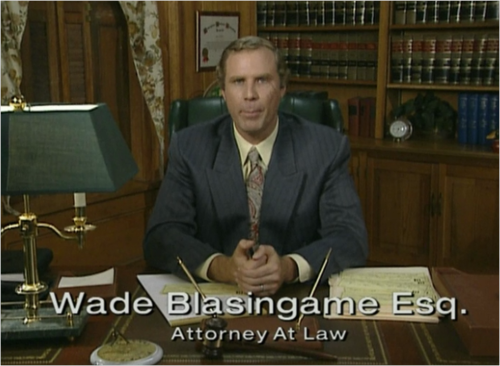
In June 1967, he was returned to the Braves in exchange for pitcher Wade Blasingame (not that one). In his only full season with the Braves (1968) he collected 10 saves, 2nd-most on the staff.

Raymond was sold to the expansion Expos in August 1969, and immediately became a fan favorite, due to his French-Canadian heritage. He led the staff with 23 saves in 1970, but in his final season (1971) he took a back seat to Mike Marshall.