Showing posts with label ...external links. Show all posts

Monday, October 22, 2012

Phillies Rookies: Larry Colton / Dick Thoenen

This is the only Phillies Rookies card in the 1968 set (#348). (There was only one Phillies Rookies card in the '66, '67, and '68 sets. That number ballooned to 3 in the '69 set. Backlog of prospects? Nah.)

Each of these players had a major-league career lasting exactly one game. (Larry Colton pitched 2 innings on 5/6/1968, while Dick Thoenen pitched 1 inning on 9/16/1967.) This is the rookie card for both players, and the only card for Thoenen. Surprisingly, Colton re-appears on a 1969 Phillies Rookies card.


Larry Colton was signed by the Phillies in 1964, and was a starting pitcher in their farm system for 5 seasons (1965-69), starting at least 25 games each season except for 1968. That season, he spent part of the time riding the bench in Philadelphia, along with some time on the DL.

At the time, it was reported that he "hurt his shoulder reaching for the telephone on his bedside table". Years later, it was revealed that he was injured in a bar fight, and it cost him his shot in the majors.

After the '69 season, he was sent to the Cubs to complete the Johnny Callison for Dick Selma and Oscar Gamble trade. Colton pitched the 1970 season for the Cubs AAA team, then was out of baseball until pitching the 1975 season for an unaffiliated class A team.

At one time, Colton was married to the daughter of movie star Hedley Hedy Lamarr.


Dick Thoenen was signed by the Phillies in 1963, and pitched for 7 seasons in their farm system. Although a starting pitcher for his first 3 seasons, he was converted to a reliever at the start of the 1966 season and worked out of the bullpen in double-A (1966), and triple-A (1966-69).

His cup of coffee was pitching the 4th inning in relief of starter Rick Wise. After giving up hits to the Dodgers' Bob Bailey and Luis Alcaraz, he retired Don Sutton, Nate Oliver, and Wes Parker in order.

I found this write-up about Dick Thoenen recently at the NJ Baseball blog. At the end of the blog post, there's a newspaper clipping listing the Phillies' September 1967 call-ups. Larry Bowa was among them, although he wouldn't get into a major-league game until April 1970.

Monday, October 8, 2012

Final Card: Fred Klages

Here is the final card for White Sox' pitcher Fred Klages (#229). He also appeared on a White Sox Rookie Stars card in the 1967 set.

Klages is from the sports hotbed of southwestern Pennsylvania, specifically Ambridge in Beaver County*, which is also the hometown of 1960s Detroit Lions middle linebacker Mike Lucci.

Fred was signed by the White Sox in 1962, and was a starting pitcher in their minor-league system for 8 seasons (1962-69), the last four in triple-A.


His brief major-league career started in September 1966, when he made 3 starts. In 1967, he made one start on June 14th, then another 10 appearances (mostly starts) from July 31st to the end of the season. His last major-league game came on September 11th - the one-year anniversary of his debut.

After 2 more seasons with the Sox' triple-A team, he played part of the 1969 season in the Mexican League.


* After clicking on the "Ambridge" link above, you can navigate to other sports stars from Beaver County, PA, including Joe Namath, Babe Parilli, Mike Ditka, Tony Dorsett, Po James, Tito and Terry Francona, Doc Medich, Hal Woodeshick, Joe Verbanic, Pete Maravich, and Norm Van Lier.

Saturday, August 18, 2012

Final Card (the bonus tracks): Pete Mikkelsen

So, I was browsing through my 1968 binder, pulling all the final cards I previously posted, for a "Final Cards Recap" post (like I did with the 1967 set). After 2 or 3 pages, I was thinking "hey, what about this guy...and that guy... and that guy?" 

I ended up with a list of 65 other players whose final card may have also been in the '68 set. After checking the Zistle database, I whittled the list down to 8 players (of which 3 are Cubs) that I missed the first time around. So here they are, the "bonus tracks".


Pete Mikkelsen's final card (#516) was in the 1968 set, despite the fact that he pitched over 150 games from 1969-72 as a member of the Dodgers' bullpen. Thanks, Topps!


Pete was signed by the Yankees in 1958, and played in the minors for 6 seasons, primarily as a reliever, but making many starts during the 1959-61 seasons. In his 9-year major-league career, Mikkelsen played 364 games, starting only 3 (in 1965).

His debut came in April 1964, and he appeared in 50 games, saving 12 as the Yankees' closer in his rookie season. After another season in the Bronx, Pete was traded to the Pirates for pitcher Bob Friend, who had been a key member of Pittsburgh's starting rotation for the past 15 seasons. Mikkelsen lasted just 1 1/2 seasons with the Bucs, and was claimed off waivers by the Cubs on August 4th, 1967.

The following April, he was traded to the Cardinals for pitcher Jack Lamabe. Ok! Moving up from the Cubs to the World Champion Cardinals! Not so fast... Pete pitched 5 games for St. Louis in June, but spent the rest of the season in triple-A.

After the season, he was traded to the Dodgers for a minor-league pitcher. Pete spent his final 4 seasons working out of the Dodgers pen, and it was a productive 4 years. The righthanded Mikkelsen was the team's #2 reliever during his 4-year stay, just behind ace southpaw Jim Brewer.

Why did Topps leave him behind? 1969 is understandable (after spending most of '68 in the minors), but what about the other years? The GarveyCeyRussellLopes blog has done what Topps was unwilling to do.

Saturday, June 2, 2012

Final Card: Bob Saverine

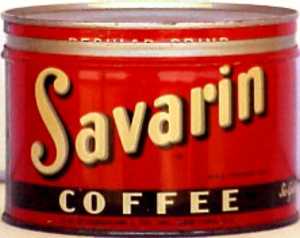
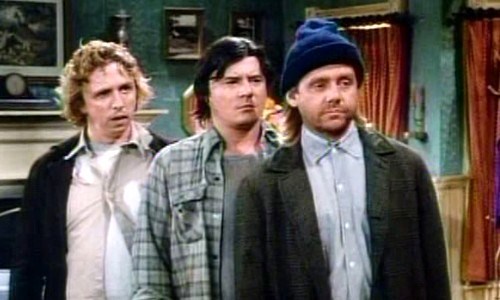
This is the last baseball card for utility man Bob Saverine (#149). The first of his cards I got was the 1967 card, where (I thought back then) he looked like Jim Nabors. My only other thought about Saverine back then was this.

Bob was signed by the Orioles in 1959 and played 4 seasons in their system, then played one game with Baltimore in September 1962. After 2 full seasons as an INF/OF with the Orioles, Saverine was back in the minors for all of 1965. (He was traded to the Astros in April for veteran pitcher Don Larsen, but played for the Orioles' AAA Rochester team.)


The Senators selected him in the Rule 5 draft following the 1965 season, and Bob spent all of '66 and '67 in Washington. In 1966 he started 67 games at 2nd base, more than veteran Don Blasingame and Ken Hamlin.

The Senators acquired Bernie Allen from the Twins in the off-season, so Saverine was relegated to utility infielder for 1967. His final big-league game was October 1, 1967. Saverine played for Washington's AAA team in Buffalo in 1968, then retired.

Wednesday, April 4, 2012

Gary Sutherland (#98)

This Gary Sutherland's first solo card. It's also the first of his cards that I got (in 1968), since his rookie card was in the 1967 7th series (none of which I had until the mid 1980s).

Sutherland was one of my favorite players on the 1967 Philadelphia Phillies (my introduction to MLB). Why? I don't really remember - maybe because he was an upstart rookie, getting a lot of playing time as a platoon player among so many veterans.


Sutherland was signed by the Phillies in 1964, the year after they signed his brother Darrell (and his other brother Darryl). Gary played just 2 seasons in the minors (as the fulltime 2nd baseman at double-A Chattanooga in 1965, and the fulltime shortstop at triple-A San Diego in 1966) before making the Phillies at the start of the 1967 season.

Although this card lists his position as "INF-OF", during his rookie season he only played shortstop and left field. For the first half of the season he platooned in left field with Johnny Briggs, and also played shortstop when Bobby Wine was not in the lineup. As the season wore on, the Phillies stopped platooning in left field, decreasing Sudsy's playing time.

During the 1968 season, Sutherland was relegated to utility infielder status (even with starting shortstop Bobby Wine going down for the season on May 12th with a back injury). The team recalled journeyman infielder Roberto Pena from the minors to handle the shortstop post. Sutherland only made 6 starts there to Pena's 128 starts.

After the '68 season, the Phillies lost Sutherland, Wine, and Pena to the expansion draft, with Sutherland and Wine going to the Montreal Expos. Gary was the Expos' starting 2nd baseman in their inaugural season, but shared the position with Marv Staehle in 1970. In 1971 he was the backup 2B/SS (behind starters Ron Hunt and Bobby Wine).

Sutherland spent most of 1972 and 1973 in the minors. Along the way, he was traded to the Astros in June 1972. It would take a December 1973 trade to the Tigers to get him back to the major leagues.

Gary made a comeback as the Tigers' regular 2nd baseman from the start of the 1974 season until his early June 1976 trade to the Brewers. In Milwaukee, Suds shared the 2nd base job with Tim Johnson and Jack Heidemann.

Gary was released prior to the 1977 season, and soon signed with the Padres. After the season he was released again. In January 1978 he was signed by the Cardinals, but was released in late May, ending his career.

Monday, July 5, 2010

Final Card: Darrell Sutherland

Here is the final card for Darrell Sutherland (#551). Darrell was signed by the Phillies in 1963, one year before they also signed his brother Gary. (Darrell's picture is 5 years old, as it shows him in a Phillies' uniform from his days with the class-A Bakersfield Phillies in 1963.)

In April 1964, the Mets selected him from the Phillies in the minor-league draft, and from 1964-66, Darrell was a starting pitcher with the Mets' triple-A teams. During those same 3 seasons, he appeared in 10, 18, and 32 games for the big club, mostly as a reliever.

In 1967, Sutherland spent the entire season with double-A Williamsport, where he made 38 relief appearances and 1 start. After the season, the Indians selected him in the minor-league player draft.


Darrell only appeared in 3 games for Cleveland in 1968, while spending the bulk of the season with the Indians' AA and AAA teams.

His final pro season was in 1969, where he appeared in 47 games (all in relief) for the Indians' triple-A Portland team.

Wednesday, June 30, 2010

Final Card: Dick Calmus

After reading about all the goings-on at Wrigley Wax Headquarters, I decided to offer up a little-known Cubs card.

After first appearing in the 1964 set as a Dodger, Dick Calmus (#427) dropped off Topps' radar for 3 years, but returned here for his final card. When I first got this card back in 1968, I thought he looked like a young Jack Kennedy!

Calmus was signed by the Dodgers in 1962. After playing 1 season of class-D ball, he spent the entire 1963 season with the Dodgers, appearing in 21 games (all but 1 in relief). He then spent the next 3 seasons in the Dodgers farm system, mostly as a starting pitcher. Calmus was at AA Albuquerque in 1964, and AAA Spokane in 1965 and 1966.


In late April 1967, he was traded to the Cubs for pitcher Fred Norman (who would go on to pitch many years with the Padres and Reds). Calmus spent the entire season at triple-A Tacoma, then made one appearance with the Cubs on September 2nd. It would be his last major-league game.

Dick would play in the minors for 2 more seasons: for the Cubs in 1968 and the Dodgers in 1969.

I wonder why he even has a card here in 1968, since he pitched a grand total of 4.1 innings in 1967, and none in 1968.

Thursday, April 22, 2010

Danny Frisella (#191)

This is the rookie card for Danny Frisella, a relief pitcher for the Mets and others from 1967 to 1976.

Frisella was signed by the Mets in June 1966. During his time in the Mets' minor-league system (1966-1970) he was a starting pitcher. He compiled a record of 11-5 during the first half of 1967 (in A and AAA ball), and then made his major-league debut on July 27th, starting 11 of his 14 games during his rookie season.

In 1968, he started 7 games in triple-A, and appeared in 19 games with the Mets, this year mostly in relief. Danny spent most of 1969 in the minors, so he missed all the "Amazin' Mets" hoopla. (I don't know if he was on the post-season roster. The Mets only used 6 pitchers in the NLCS, and 6 pitchers in the World Series, and he wasn't one of them.)


Frisella started 13 games for the Mets' triple-A team in 1970, and rejoined the Mets' bullpen, where he appeared in 30 games as the setup man for closers Ron Taylor and Tug McGraw. He won 8 games in each of 1970 and 1971, and became the right-handed closer in 1971, leading the team with 12 saves.

In 1972, his record slipped to 5-8, and his saves dropped to 9, as lefty Tug McGraw picked up most of the team's saves that season. After the season, Danny was traded to the Braves (with pitcher Gary Gentry) for 2nd baseman Felix Millan and pitcher George Stone.

Frisella spent 2 seasons in the Braves' bullpen, and was traded to the Padres for outfielder Cito Gaston in the off-season.

He was the Padres' closer in 1975, and although he compiled a 1-6 record, he led the team with 9 saves. After only one season, he was traded to the Cardinals on April 8, 1976. Two months later, after only 22 innings pitched, he was shipped to Milwaukee, where he became the Brewers' closer, again leading his team in saves.

On January 1, 1977 Danny Frisella was killed in a dune buggy accident in Arizona at age 30.

Here is a message board on the Ultimate Mets Database site, where fans (and Frisella's widow) have posted their comments.
.

Tuesday, January 26, 2010

Jim Pagliaroni (#586)

Jim Pagliaroni was signed by the Red Sox in 1955 as a bonus baby. A 1952 rule stipulated that a player receiving a bonus of more than a $4000 must remain on the major-league roster for 2 seasons. That year, he played no minor-league ball, but appeared in 1 game for the Red Sox (on August 13th). Jim was one of 15 players in the 1950s to make their major-league debut at age 17. (Some others were Joey Jay, Claude Osteen, Mike McCormick, and Tim McCarver.)

Since he was required to be on the major-league roster for another full season, the Red Sox talked him into enlisting in military service for 2 years, so he could get it "out of the way" during a time when he wouldn't be playing much anyway.

He played for various minor-league teams from 1958 to 1960, and played in 28 games with the Red Sox in 1960, starting 15 games behind the plate. In 1961 he was the #1 catcher, making almost twice as many starts as Russ Nixon, who was 1960's primary catcher.


In 1962, he split the starting catcher's job evenly with rookie Bob Tillman. After the season, Jim was traded to the Pirates with pitcher Don Schwall for pitcher Jack Lamabe and first baseman Dick Stuart.

Jim played 5 seasons with the Pirates, and was the #1 catcher for the first 4 seasons. Injuries limited his playing time in 1967. Following the 1967 season, he was sold to the Athletics, where at age 30, he shared the starting catcher's job with 22-year-old Dave Duncan.

In May 1969, Pagliaroni was sold to the Seattle Pilots, where he finished his career before getting his release after the season. He was used mostly as a pinch-hitter, but also as the 2nd-string catcher behind Jerry McNertney.

Friday, January 8, 2010

Rick Monday (#282)

Rick Monday was the first pick in the 1965 amateur draft - the very first draft.

He spent his first 2 seasons in the minors, making his major-league debut on 9/3/1966. He had a fine rookie season in 1967, and although he was named to the Topps' 1967 All-Rookie team, a trophy doesn't appear on his card.


After 5 seasons as the Athletics' centerfielder, Rick was traded to the Cubs for pitcher Ken Holtzman in November 1971. Monday played with the Cubs for 5 seasons, and has his best power numbers there - hitting 26, 20, and 32 homers in 3 of his 5 seasons with Chicago.

In January 1977, Monday was traded to the Dodgers with pitcher Mike Garman for shortstop Ivan DeJesus and outfielder Bill Buckner. In his first season in LA, he was the Dodgers' regular centerfielder, but year by year, his playing time was reduced, so that by his final season in 1984, he only appeared in 31 games. He was released in June 1984.

Saturday, November 14, 2009

Final Card: Elston Howard

Elston Howard (#167) began playing baseball in 1948 as an outfielder for the Kansas City Monarchs in the Negro American League. There, he was a teammate of future Chicago Cub Ernie Banks. Buck O'Neill (who came to my attention in Ken Burns' excellent mini-series on baseball) was the manager of that team.

In July 1950, the Yankees purchased his contract from the Monarchs and assigned him to their farm system, where he learned to be a catcher. His first season for the Yankees was 1955. Since the Yankees already had Yogi Berra catching, and an outfield that included Mickey Mantle and Hank Bauer, Howard's playing time came mainly in left field, which he shared with Norm Siebern, as well as backing up at catcher and 1st base.


In 1960, Howard finally became a regular, catching more games than Berra. From 1961 to 1963, he hit over 20 home runs per season, and won the AL MVP award in 1963.

In August 1967, Elston was traded to the Red Sox, where he was a steadying influence on their pitching staff (and I assume, a mentor for Boston's young catchers Mike Ryan and Russ Gibson). Howard played in the 1967 World Series for the Red Sox, his 10th series. He was released after the 1968 season, ending a 14-year major-league career.

Sunday, November 1, 2009

Final Card: Jim Bouton

The career peak for Jim Bouton (#562) was in 1963 and 1964. He won 21 games in 1963, and won 2 games in the 1964 World Series.

This is Bouton's last baseball card (although blogger WhiteSoxCards has thankfully corrected that situation). The reason for this may be that he spent most of 1968 in the minors. After appearing in 12 games for the Yankees, he was sent to the Angels' triple-A team in Seattle, where he spent the remainder of 1968 (going 4-7 in 27 games).

As you may know, 1968 was not Bouton's last major-league season. He stayed in Seattle, as a relief pitcher for the expansion Seattle Pilots. He made 57 appearances before being traded to the Astros in late August. Bouton documented this season in his best-selling book Ball Four. For anyone who hasn't read it, Bouton kept a daily diary of the season, and turned it into a book. His recollections of manager Joe Schultz, outfielder Wayne Comer, and the other animals in this Seattle zoo make for great reading.


Bouton continued with the Astros for most of the 1970 season, until being released in mid-August. After his book was published, he pretty much put himself on the blacklist regarding future employment.

He had a brief comeback in the late 1970s, playing A and double-A ball from 1975-78, and appearing in 5 games for the Braves in 1978.

Tuesday, October 6, 2009

Houston, we have a problem...

In a strange move, the word "Astros" was not to be found on any Houston Astros card in 1968 or 1969. As far as Topps was concerned, the team name was known as "Houston" on the front and back of every card (including text on the back). Also, the Astros "star" logo was removed from all hats. This was done in three ways.

1. There was the standard airbrushing jobs (here you can see the mess that remains after a poor airbrushing job):


2. Besides the usual airbrushing, Topps replaced the front of the hat with a black space (It looks like they simply cut a hole in the film.) This was also done extensively with the Oakland Athletics' cards. (This was the first year following the move from Kansas City, so all the Athletics' cards were given the no-hat-logo treatment - more on that in another post):


In the mid-1960s, the Astros seemed to have more than their share of sub-par catchers. First there was John Bateman and Ron Brand. In 1967, Brand was left out of the Topps set while the non-descript Bill Heath was given a card. In 1968, Heath was out, Brand was back, and we were also treated to a third-string catcher named Dave Adlesh. They were all gone before 1969 (Bateman and Brand were scooped up by Montreal in the 1969 expansion draft, and Adlesh landed in St. Louis).


3. And then there was the old fall-back of going hatless (same Morgan photo used in 1969). Here it looks like Joe is thinking "If only I could go to a better place - like Cincinnati".


10/29/2009 edit:
Thanks to Fleerfan for his take on the 1968/1969 Astros issue.

11/26/2009 edit:
Here's another angle that I just found today.