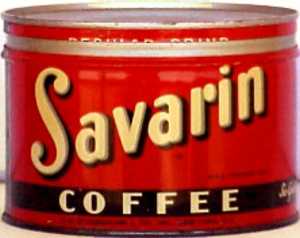
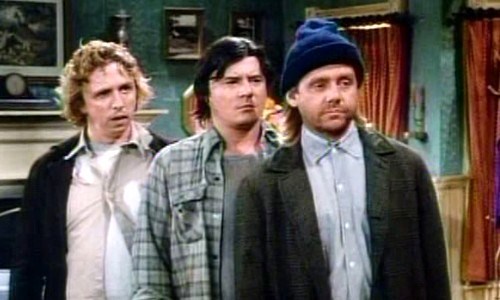
This is the last baseball card for utility man Bob Saverine (#149). The first of his cards I got was the 1967 card, where (I thought back then) he looked like Jim Nabors. My only other thought about Saverine back then was this.
Bob was signed by the Orioles in 1959 and played 4 seasons in their system, then played one game with Baltimore in September 1962. After 2 full seasons as an INF/OF with the Orioles, Saverine was back in the minors for all of 1965. (He was traded to the Astros in April for veteran pitcher Don Larsen, but played for the Orioles' AAA Rochester team.)
The Senators selected him in the Rule 5 draft following the 1965 season, and Bob spent all of '66 and '67 in Washington. In 1966 he started 67 games at 2nd base, more than veteran Don Blasingame and Ken Hamlin.
The Senators acquired Bernie Allen from the Twins in the off-season, so Saverine was relegated to utility infielder for 1967. His final big-league game was October 1, 1967. Saverine played for Washington's AAA team in Buffalo in 1968, then retired.
Saturday, June 2, 2012
Sunday, May 13, 2012
NL Batting Leaders (#1, #3, #5)
A (long) while back, I posted the NL Pitching Leaders cards. Today we have the NL Batting Leaders. Roberto Clemente and Hank Aaron each appear twice among these cards (backing up the voters' choices in a recent poll).
Roberto Clemente led the NL in batting for the 4th and final time (also in '61, '64, and '65). Tony Gonzalez began the 1967 season as a platoon player, but stepped up midway through, and batted .339 overall. Matty Alou picked up where he left off the previous season.
Orlando Cepeda powered the Cardinals to the 1967 World Series. "Bob" Clemente makes his 2nd appearance here, along with Hammerin' Hank.
Hank Aaron continued his assault on Babe Ruth's record, winning his 4th and final NL home run crown with 39 homers. (His other three titles were all won with 44 home runs.) Only Harmon Killebrew hit more home runs in the 1960s. Next we have Jim Wynn (now playing for "Houston"), followed by Ron Santo and Willie McCovey tied for 3rd place.
Roberto Clemente led the NL in batting for the 4th and final time (also in '61, '64, and '65). Tony Gonzalez began the 1967 season as a platoon player, but stepped up midway through, and batted .339 overall. Matty Alou picked up where he left off the previous season.
Orlando Cepeda powered the Cardinals to the 1967 World Series. "Bob" Clemente makes his 2nd appearance here, along with Hammerin' Hank.
Hank Aaron continued his assault on Babe Ruth's record, winning his 4th and final NL home run crown with 39 homers. (His other three titles were all won with 44 home runs.) Only Harmon Killebrew hit more home runs in the 1960s. Next we have Jim Wynn (now playing for "Houston"), followed by Ron Santo and Willie McCovey tied for 3rd place.
Wednesday, April 4, 2012
Gary Sutherland (#98)
This Gary Sutherland's first solo card. It's also the first of his cards that I got (in 1968), since his rookie card was in the 1967 7th series (none of which I had until the mid 1980s).
Sutherland was one of my favorite players on the 1967 Philadelphia Phillies (my introduction to MLB). Why? I don't really remember - maybe because he was an upstart rookie, getting a lot of playing time as a platoon player among so many veterans.


Sutherland was signed by the Phillies in 1964, the year after they signed his brother Darrell (and his other brother Darryl). Gary played just 2 seasons in the minors (as the fulltime 2nd baseman at double-A Chattanooga in 1965, and the fulltime shortstop at triple-A San Diego in 1966) before making the Phillies at the start of the 1967 season.
Although this card lists his position as "INF-OF", during his rookie season he only played shortstop and left field. For the first half of the season he platooned in left field with Johnny Briggs, and also played shortstop when Bobby Wine was not in the lineup. As the season wore on, the Phillies stopped platooning in left field, decreasing Sudsy's playing time.
During the 1968 season, Sutherland was relegated to utility infielder status (even with starting shortstop Bobby Wine going down for the season on May 12th with a back injury). The team recalled journeyman infielder Roberto Pena from the minors to handle the shortstop post. Sutherland only made 6 starts there to Pena's 128 starts.
After the '68 season, the Phillies lost Sutherland, Wine, and Pena to the expansion draft, with Sutherland and Wine going to the Montreal Expos. Gary was the Expos' starting 2nd baseman in their inaugural season, but shared the position with Marv Staehle in 1970. In 1971 he was the backup 2B/SS (behind starters Ron Hunt and Bobby Wine).
Sutherland spent most of 1972 and 1973 in the minors. Along the way, he was traded to the Astros in June 1972. It would take a December 1973 trade to the Tigers to get him back to the major leagues.
Gary made a comeback as the Tigers' regular 2nd baseman from the start of the 1974 season until his early June 1976 trade to the Brewers. In Milwaukee, Suds shared the 2nd base job with Tim Johnson and Jack Heidemann.
Gary was released prior to the 1977 season, and soon signed with the Padres. After the season he was released again. In January 1978 he was signed by the Cardinals, but was released in late May, ending his career.
Sutherland was one of my favorite players on the 1967 Philadelphia Phillies (my introduction to MLB). Why? I don't really remember - maybe because he was an upstart rookie, getting a lot of playing time as a platoon player among so many veterans.


Sutherland was signed by the Phillies in 1964, the year after they signed his brother Darrell (and his other brother Darryl). Gary played just 2 seasons in the minors (as the fulltime 2nd baseman at double-A Chattanooga in 1965, and the fulltime shortstop at triple-A San Diego in 1966) before making the Phillies at the start of the 1967 season.
Although this card lists his position as "INF-OF", during his rookie season he only played shortstop and left field. For the first half of the season he platooned in left field with Johnny Briggs, and also played shortstop when Bobby Wine was not in the lineup. As the season wore on, the Phillies stopped platooning in left field, decreasing Sudsy's playing time.
During the 1968 season, Sutherland was relegated to utility infielder status (even with starting shortstop Bobby Wine going down for the season on May 12th with a back injury). The team recalled journeyman infielder Roberto Pena from the minors to handle the shortstop post. Sutherland only made 6 starts there to Pena's 128 starts.
After the '68 season, the Phillies lost Sutherland, Wine, and Pena to the expansion draft, with Sutherland and Wine going to the Montreal Expos. Gary was the Expos' starting 2nd baseman in their inaugural season, but shared the position with Marv Staehle in 1970. In 1971 he was the backup 2B/SS (behind starters Ron Hunt and Bobby Wine).
Sutherland spent most of 1972 and 1973 in the minors. Along the way, he was traded to the Astros in June 1972. It would take a December 1973 trade to the Tigers to get him back to the major leagues.
Gary made a comeback as the Tigers' regular 2nd baseman from the start of the 1974 season until his early June 1976 trade to the Brewers. In Milwaukee, Suds shared the 2nd base job with Tim Johnson and Jack Heidemann.
Gary was released prior to the 1977 season, and soon signed with the Padres. After the season he was released again. In January 1978 he was signed by the Cardinals, but was released in late May, ending his career.
Monday, March 12, 2012
Lee May (#487)
For 6 straight seasons in the 1960s, the Cincinnati Reds had at least one of the 10 Topps All-Star Rookies:
1963 - Pete Rose 2B, Tommy Harper OF
1964 - Bill McCool P
1965 - Tony Perez 1B
1966 - Tommy Helms 3B
1967 - Lee May 1B
1968 - Johnny Bench C
(What, no shortstop?)
Lee May was signed by the Reds in 1961, and played for 6 seasons in their farm system, mostly at first base, with a few games as an outfielder in 1964 and 1965. Those 2 seasons were big for May, as he batted over .300 and collected over 100 RBI each year. He also hit 25 and 34 homers, respectively.
Lee got a big-league cup of coffee in 1965 and another 25 games in 1966, before making the Reds for good at the start of 1967.


I always thought the arrival of Lee May in 1967 set the Reds' defense in shuffle mode: Tony Perez from 1B to 3B, Tommy Helms to 2B, and Pete Rose to the outfield. In fact, Helms and Rose had moved at the start of the season, before May cracked the starting lineup, (with Deron Johnson coming in from left field to play 3B). In early May, Perez moved from 1st to 3rd, with Johnson and May alternating chunks of games as the starting 1st baseman. (Lee also spent about a month in left field, with Rose returning to 2B and Helms to shortstop during Chico Cardenas' trip to the DL.) By the time the season was over, May had started 68 games at 1B and 47 in the outfield.
Things settled down defensively in 1968. In the off-season, Johnson was traded to Atlanta which opened up a full-time 1st base job for May. Lee began a string of 11 very productive seasons. He was with the Reds through 1971, then 3 seasons with the Astros (sent there in the Joe Morgan trade), before settling in Baltimore in 1975.
May was the Orioles' 1st baseman in his 1st season there, then eased into the DH role in '76 and '77 before becoming the full-time DH in '78 and '79. In his last 3 seasons, May was relegated to a part-time role, the final 2 with Kansas City.
Lee retired after the 1982 season. His brother Carlos was the White Sox' regular left fielder during the early 1970s.
1963 - Pete Rose 2B, Tommy Harper OF
1964 - Bill McCool P
1965 - Tony Perez 1B
1966 - Tommy Helms 3B
1967 - Lee May 1B
1968 - Johnny Bench C
(What, no shortstop?)
Lee May was signed by the Reds in 1961, and played for 6 seasons in their farm system, mostly at first base, with a few games as an outfielder in 1964 and 1965. Those 2 seasons were big for May, as he batted over .300 and collected over 100 RBI each year. He also hit 25 and 34 homers, respectively.
Lee got a big-league cup of coffee in 1965 and another 25 games in 1966, before making the Reds for good at the start of 1967.


I always thought the arrival of Lee May in 1967 set the Reds' defense in shuffle mode: Tony Perez from 1B to 3B, Tommy Helms to 2B, and Pete Rose to the outfield. In fact, Helms and Rose had moved at the start of the season, before May cracked the starting lineup, (with Deron Johnson coming in from left field to play 3B). In early May, Perez moved from 1st to 3rd, with Johnson and May alternating chunks of games as the starting 1st baseman. (Lee also spent about a month in left field, with Rose returning to 2B and Helms to shortstop during Chico Cardenas' trip to the DL.) By the time the season was over, May had started 68 games at 1B and 47 in the outfield.
Things settled down defensively in 1968. In the off-season, Johnson was traded to Atlanta which opened up a full-time 1st base job for May. Lee began a string of 11 very productive seasons. He was with the Reds through 1971, then 3 seasons with the Astros (sent there in the Joe Morgan trade), before settling in Baltimore in 1975.
May was the Orioles' 1st baseman in his 1st season there, then eased into the DH role in '76 and '77 before becoming the full-time DH in '78 and '79. In his last 3 seasons, May was relegated to a part-time role, the final 2 with Kansas City.
Lee retired after the 1982 season. His brother Carlos was the White Sox' regular left fielder during the early 1970s.
Sunday, February 12, 2012
Final Card: Bruce Von Hoff
This is the only Topps baseball card for Bruce Von Hoff (#530). Like Ron Campbell in 1967 and Dave Watkins in 1970, his major-league career was over before his only card was issued.


Bruce was signed by the Giants in 1964, and pitched in the minors for 7 seasons (1964-70), mostly at the double-A and A levels. He was a starting pitcher in all but his first season. After one season in the Giants' system, Von Hoff pitched for various Astros' clubs for 4 seasons, before moving on to the Reds (1969) and Cardinals (1970).
His only big-league experience came in 1965 (3 relief appearances, 3 innings) and 1967 (10 starts, 50 innings total).
I'm surprised he even has a card in this set, since a) he wasn't one of the Astros' top 12 pitchers in 1967 in terms of games played, and b) this is card #529 (in the last series), so there was plenty of time for Topps to pull this card in favor of someone else more deserving (like a Giants Rookie Stars card!)


Bruce was signed by the Giants in 1964, and pitched in the minors for 7 seasons (1964-70), mostly at the double-A and A levels. He was a starting pitcher in all but his first season. After one season in the Giants' system, Von Hoff pitched for various Astros' clubs for 4 seasons, before moving on to the Reds (1969) and Cardinals (1970).
His only big-league experience came in 1965 (3 relief appearances, 3 innings) and 1967 (10 starts, 50 innings total).
I'm surprised he even has a card in this set, since a) he wasn't one of the Astros' top 12 pitchers in 1967 in terms of games played, and b) this is card #529 (in the last series), so there was plenty of time for Topps to pull this card in favor of someone else more deserving (like a Giants Rookie Stars card!)
Sunday, January 22, 2012
Final Card: Dick Kenworthy
This is the only Topps card for Dick Kenworthy. The back says that he was sent to the Mets in the off-season as the player to be named later in the Ken Boyer trade. Interesting. Baseball-Reference.com makes no mention of Kenworthy ever being sent to the Mets. In fact, it says the White Sox sent J. C. Martin to the Mets on 11/27/67 to complete the trade. Since this is card #63, it must have been printed sometime in late 1967, so maybe Topps was acting on some preliminary scuttlebutt regarding Kenworthy.


Kenworthy was signed by the White Sox in 1961, and played in their minor-league system for 10 seasons, before moving over to the Reds' farm system for 1971 and 1972. He was a 2nd baseman for his first two seasons before switching to 3rd base for the balance of his career.
Dick's major-league experience consisted of a few cups of coffee from 1962 to 1966. Then in 1967 and 1968, he played over 50 games each season with the White Sox, about half of them as the starting 3rd baseman.
Since he played for the White Sox in both '67 and '68, it looks like Baseball-Reference.com is right and Topps was wrong. Maybe a White Sox fan can clarify this.


Kenworthy was signed by the White Sox in 1961, and played in their minor-league system for 10 seasons, before moving over to the Reds' farm system for 1971 and 1972. He was a 2nd baseman for his first two seasons before switching to 3rd base for the balance of his career.
Dick's major-league experience consisted of a few cups of coffee from 1962 to 1966. Then in 1967 and 1968, he played over 50 games each season with the White Sox, about half of them as the starting 3rd baseman.
Since he played for the White Sox in both '67 and '68, it looks like Baseball-Reference.com is right and Topps was wrong. Maybe a White Sox fan can clarify this.
Tuesday, January 17, 2012
Final Card: Dick Lines
The 1960s' Hall of Fame results are now on my 1960s Baseball blog.
This is the 2nd and last Topps card for Senators' pitcher Dick Lines (#291). His rookie card was in the 1967 set, a 1-player card showing Lines with the Senators.
Lines' career is somewhat of a mystery. He spent 9 full seasons in the minors, before pitching the entire 1966 and 1967 seasons with the Senators. Then, it was back to the minors for 2 more seasons before calling it quits.


Lines was signed by the Pirates in 1957, and pitched in their farm system for 8 seasons, all but the last as a starting pitcher. Prior to the 1965 season, his contract was sold to the Senators. That season he pitched for the Sens' AAA team in Hawaii, which finally earned him a shot in the majors.
Dick spent the entire 1966 season as the only lefthander in Washington's bullpen, which featured veterans Ron Kline and Bob Humphreys, along with Casey Cox and 3 others who floated between the bullpen and the rotation (Jim Hannan, Diego Segui, and Dick Bosman). Lines fashioned a 5-2 record in 82 innings, and had a 49/24 strikeout-to-walk ratio.
In 1967, the Senators' bullpen featured Darold Knowles (a lefty), veteran Bob Priddy, and rookie Dave Baldwin in place of Ron Kline and Diego Segui. Lines, Humphreys, and Cox were the holdovers from '66. Knowles and Baldwin were the stars in terms of saves and ERA, and Knowles, Humphreys, and Priddy had the most innings pitched among relievers. Lines had similar games, innings, and strikeout/walks to the previous season, but his record fell from 5-2 to 2-5. I guess he was just out-performed by the other guys, because he didn't pitch in the majors after 1967.
Two more seasons (1968-69) in the Nats' farm system brought an end to Dick Lines' career.
This is the 2nd and last Topps card for Senators' pitcher Dick Lines (#291). His rookie card was in the 1967 set, a 1-player card showing Lines with the Senators.
Lines' career is somewhat of a mystery. He spent 9 full seasons in the minors, before pitching the entire 1966 and 1967 seasons with the Senators. Then, it was back to the minors for 2 more seasons before calling it quits.


Lines was signed by the Pirates in 1957, and pitched in their farm system for 8 seasons, all but the last as a starting pitcher. Prior to the 1965 season, his contract was sold to the Senators. That season he pitched for the Sens' AAA team in Hawaii, which finally earned him a shot in the majors.
Dick spent the entire 1966 season as the only lefthander in Washington's bullpen, which featured veterans Ron Kline and Bob Humphreys, along with Casey Cox and 3 others who floated between the bullpen and the rotation (Jim Hannan, Diego Segui, and Dick Bosman). Lines fashioned a 5-2 record in 82 innings, and had a 49/24 strikeout-to-walk ratio.
In 1967, the Senators' bullpen featured Darold Knowles (a lefty), veteran Bob Priddy, and rookie Dave Baldwin in place of Ron Kline and Diego Segui. Lines, Humphreys, and Cox were the holdovers from '66. Knowles and Baldwin were the stars in terms of saves and ERA, and Knowles, Humphreys, and Priddy had the most innings pitched among relievers. Lines had similar games, innings, and strikeout/walks to the previous season, but his record fell from 5-2 to 2-5. I guess he was just out-performed by the other guys, because he didn't pitch in the majors after 1967.
Two more seasons (1968-69) in the Nats' farm system brought an end to Dick Lines' career.
Labels:
...debut: 1966,
...final card,
.Senators,
Dick Lines
Friday, January 13, 2012
Final Card: Garry Roggenburk
This is the final card for Garry Roggenburk (#581). Garry was signed by the Twins in 1962 and was assigned to the class-D Erie (PA) Sailors, where his teammates included future big-leaguers Jim Merritt, Joe Foy, and Ted Uhlaender. He started all 18 of his appearances that season, fashioning a 13-4 record. After only 1 season in the minors, he made the Twins in 1963, debuting on April 20th. With the Twins, he mainly worked out of the bullpen, only starting 2 of his 36 games.
Garry missed the entire 1964 season with injuries. When he returned, he split each of the next 2 years between Minnesota and their triple-A Denver team. During those seasons, he was a relief pitcher except for his minor-league stint in 1966.


In early September 1966, Garry's contract was sold to the Red Sox. Although he had a card in the 1967 Topps set, he spent the entire season in the minors, missing Boston's trip to the World Series.
The 1968 and 1969 seasons were a repeat of 1965 and 1966, only the cities changed. Roggenburk spent part of each season with the Red Sox and part in the minors. The only change of pace was that in June 1969 he was sold to the expansion Seattle Pilots. He pitched 24 innings over the final half of that season for the Pilots, both as a starter and reliever.
Garry missed the entire 1964 season with injuries. When he returned, he split each of the next 2 years between Minnesota and their triple-A Denver team. During those seasons, he was a relief pitcher except for his minor-league stint in 1966.


In early September 1966, Garry's contract was sold to the Red Sox. Although he had a card in the 1967 Topps set, he spent the entire season in the minors, missing Boston's trip to the World Series.
The 1968 and 1969 seasons were a repeat of 1965 and 1966, only the cities changed. Roggenburk spent part of each season with the Red Sox and part in the minors. The only change of pace was that in June 1969 he was sold to the expansion Seattle Pilots. He pitched 24 innings over the final half of that season for the Pilots, both as a starter and reliever.
Subscribe to:
Posts (Atom)